
AI Is Not Automation. It Is Coordination.
When an executive tells me they are doing AI, they almost always mean they are automating tasks. That instinct is the reason so many AI strategies produce activity and no advantage.
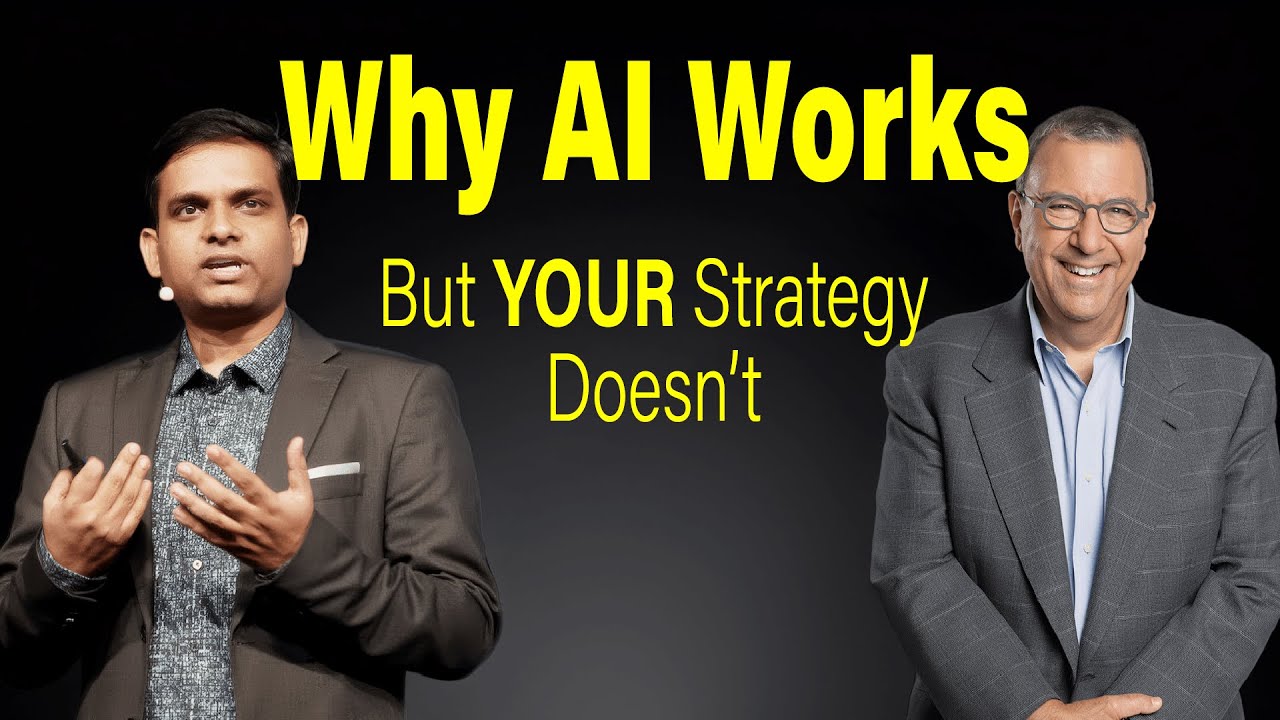
Sangeet Paul Choudary has advised more than 40 Fortune 500 CEOs and wrote the book Reshuffle. He joined me for episode 900 of CXOTalk, and his argument is that we have the category wrong. AI is not automation technology. It is coordination infrastructure. Here is how I framed it at the top of the show:
Most executives see AI as just automation. That’s wrong and explains why their AI strategies fail.
Michael Krigsman, CXOTalk episode 900
Automating tasks is not a strategy
I work with a lot of executives, and when they say that they’re implementing AI or they’re thinking about AI, they typically mean that they’re automating tasks, they’re automating workflows in their organization, they’re deploying technology towards automation. And my key argument in the book is that the real value of AI plays out not through automating tasks in the system, but through reimagining your business around the capabilities of AI. Because the real advantage or the real impact of any technology plays out when economic activity gets reorganized based on the new capabilities of the technology that is made available.
Sangeet Paul Choudary, founder, Platform Thinking Labs
Economic activity gets reorganized. That is the phrase to sit with. Electricity did not matter because it replaced the steam engine at the center of the factory. It mattered because it let you tear the factory up and lay it out around the work instead of around the driveshaft. The machine was the small part. The reorganization was the whole thing.
The two questions strategy is actually about
I asked him to take it down a level, because most of us instinctively think of technology as a way to make the current business better, faster, and cheaper. His answer named the trap precisely.
Even when executives today say, “We need an AI strategy,” when I ask them about it, very often what they mean is, “We want to figure out what should we do with AI.” And that sort of traps them within thinking about, “Here’s our business. How do we apply AI into it to get things cheaper, better, faster?” But that’s not really what strategy is about. Strategy is fundamentally about answering two questions. Where do we play? How do we win?
Sangeet Paul Choudary
Where do we play, and how do we win. Neither question is answered by a list of use cases. Both are answered by looking at how AI changes the playing field itself, who you now compete with, and where value gets created and captured once the capability is available to everyone.
The uncomfortable implication is that a company can execute its AI roadmap perfectly and still lose, because the roadmap treated the existing business as fixed.
Why he wrote past the hype
There’s a lot of hype about AI at the moment, and there’s some fairly consistent patterns that we see in how strategy and systems change when new technologies come in. And when we’re in the midst of hype, we sort of miss that whole understanding exactly how some of these things will play out. So, the reason I wrote Reshuffle was to kind of extract us away from how we think about AI in terms of the hype today, but really to think about how enduring change happens because of new technologies.
Sangeet Paul Choudary
This is why I keep booking guests like Choudary. The pattern of how technology reorganizes work is older than any of us, and it is far more predictive than whatever was announced last week.
What the coordination frame changes
If AI is coordination infrastructure rather than a task automator, three things follow.
Speed becomes a liability, not a virtue. Automate one function and it now runs at a different tempo than the functions around it. Handoffs break. The faster you automate a single department, the more coordination debt you take on everywhere else. Most companies are busy celebrating exactly that kind of local win.
Redesign beats retrofit. Bolting AI onto a process that was designed around human latency preserves every assumption that human latency created. Choudary’s argument is that the process itself is the artifact that has to change.
Strategy questions outrank use case questions. Before asking what to do with AI, ask what AI does to the field you compete on. If the answer is nothing, you have found a rare and valuable piece of information. If the answer is something, the use case list was never the point.
The connection to everything else I cover
I have spent two decades looking at why enterprise technology projects fail, and this episode names a failure mode that predates AI by a long way. The project succeeds. The technology works. The organization around it never changed, so nothing that matters moves. We used to call that a failed ERP rollout. Now we call it a stalled AI pilot.
The name is new. The disease is not.
Watch the full conversation and read the complete transcript: Why AI Works, But Your Strategy Doesn’t, CXOTalk episode 900. Sangeet Paul Choudary is the founder of Platform Thinking Labs and the author of Reshuffle.

Michael Krigsman
Michael Krigsman is an industry analyst and the founder and host of CXOTalk, where he has interviewed close to 900 C-level leaders since 2013. He spent two decades writing about IT project failure for ZDNet and founded Asuret, a consultancy built to diagnose why enterprise projects go wrong. He is based in Boston. More about Michael or get in touch.